
Photo by Muhd Asyraaf on Unsplash
We can’t. Well, not really.
Singapore is touted as the country to emulate (or not) for diverse reasons, depending on your favoured political/economic/social flavours. I won’t go into all of that today. What I would like to discuss is Malaysia’s Housing and Local Government Minister Nga Kor Ming’s statement that Malaysia is working with Singapore’s Housing Development Board (HDB) on a new Program Residensi Rakyat (PRR) public housing programme (see e.g., here) The PRR will be different from the existing Program Perumahan Rakyat (PPR).
Malaysia could try to emulate parts of Singapore’s public housing system. However, it is critical to understand the fundamentals of what Singapore is really trying to achieve, i.e., its policy goals in housing and beyond. The essay below is a preliminary attempt to dissect this. It describes key features of Singapore’s public housing and its privatisation; analyses how Singapore uses public housing as a strategic tool in achieving policy goals; and assesses the transferability of the Singapore approach to other countries.
Before that, a few caveats. First, I wrote this essay in May 2024 for an Urban Policy module assignment for my MSc programme. There was a word limit so lots of content didn’t make it past the chopping block. I also had to write it in a prescribed manner. Second, my perspective is an outsider’s view as I’m not Singaporean and I’ve only visited HDB units several times in my life. Third, all views are my own and any feedback on errors or constructive messages pointing out how my essay is completely flawed will be appreciated.
TL; DR: Public housing in Singapore is a policy tool for the government to achieve its goals of maintaining social and political stability, financial stability, and achieving socioeconomic development. Policymakers aiming to replicate Singapore’s success need to understand how its historic path dependencies have led to the state of its public housing today. Singapore’s unique context can be understood in four areas: controlled market demand, land policies favouring the state, extreme government power centralisation, and the importance of interlinked government institutions – the HDB and CPF in particular. Singapore’s public housing has succeeded because of its interlinked, mutually reinforcing policies and mechanisms that have evolved synergistically over time, leading to compounding positive outcomes.
Privatising public housing: lessons from Singapore
We critically assess Singapore’s privatised public housing (PPH) experience, regarded as a rare success of universal housing provision (Chua, 2014). First, we briefly describe key features of Singapore’s public housing and its privatisation. Second, we analyse how Singapore has benefitted from using PPH as a strategic tool in achieving its policy goals in housing and beyond. Finally, we assess the transferability of Singapore’s approach to other countries.
Singapore’s approach towards the coordination of public goods and services, including housing has been described as highly interventionist (Teo, 2017, p. 383). The Housing & Development Board (HDB) is the centralised agency responsible for developing, building, and managing Singapore’s public housing. In the 1960s, the HDB began constructing high-rise flats, replacing government-acquired private housing which consisted of “low-density shophouses, squatter settlements, and villages” (Phang and Helble, 2016). From 1961 to 2013, the HDB built over a million public housing units (Chua, 2014). The agency started offering 99-year leasehold PPH flats in high-rise housing blocks from 1964 (Chua, 2014). Importantly, Singapore’s public housing is not residual as over 80% of the population are residents, with 90% of households qualifying for public housing in 2006 (Yuen et al., 2006). The national homeownership rate jumped from 29% in 1970 (Phang and Helble, 2016) to 90% today, with the majority living in PPH units (Teo, 2017, p. 388). Figure 1 illustrates Singapore’s public and private sector housing provision systems. After the initial sale and subject to a minimum domicile period, PPH units are eligible for resale in the active secondary market (Teo, 2017, p. 388).
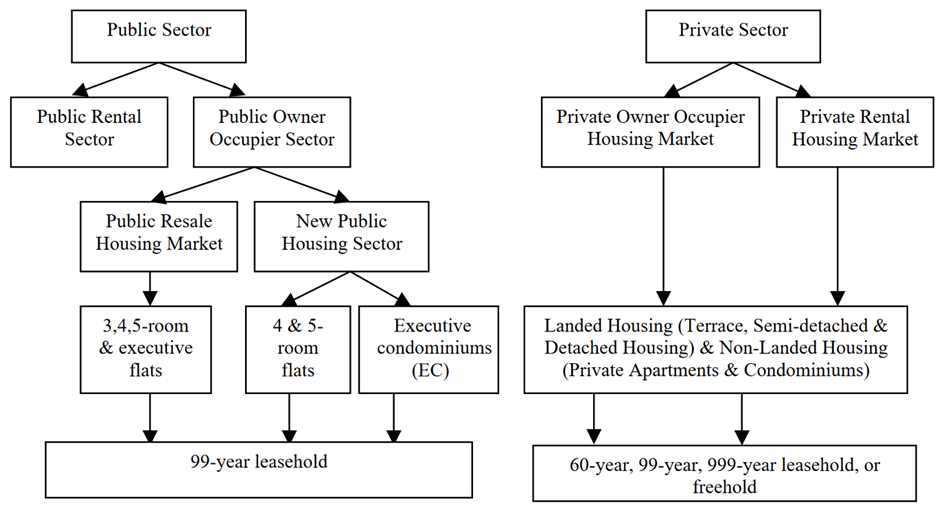
Figure 1: Singapore’s housing provision system (Yuen et al., 2006, p. 257).
Housing systems have significant causal impacts on political behaviour, social stability and economic outcomes (Schwartz and Seabrooke, 2008). Former Prime Minister Lee Kuan Yew articulated Singapore’s unwavering commitment to public housing in post-independence Singapore, during a 2000 lecture (Ministry of Information and The Arts, 2000):
… I resolved to enable every household to own its own home. If we were going to get the people to take National Service seriously, I could not ask their sons to fight and die for the properties of the wealthy … Today, 95% of Singaporean households are home-owners. It has immeasurably increased their wealth and our social stability.
Singapore used PPH as a tool to achieve high homeownership rates, enabling three interrelated goals: social and political stability, financial stability, and socioeconomic development.
PPH enabled Singapore to achieve the first goal of social and political stability by incorporating the population into a “commitment to the nation”, thereby reducing “potential dissent and social fissures” (Yuen, 2002, p. 45). PPH legitimises the ruling government (Ho, 2021), locking the state and population “in a dependant-supplier relationship” where citizens accept a form of “clientship” in exchange for state-provided goods and services (Wong and Yap, 2003). As PPH is managed by town councils under “direct government surveillance” (Wong and Yap, 2003), PPH facilitates indirect government influence on social norms, arguably a form of social engineering.
For example, the 1989 Ethnic Integration Policy enforces fixed quotas on the ethnic proportions of PPH residents, preventing ethnic ghettos (Phang and Helble, 2016). Meanwhile, those who do not conform to specified gendered and heteronormative ways have difficulties accessing PPH (Teo, 2017, p. 383). Potential PPH buyers must fulfil “family nucleus” requirements, unmarried buyers must be citizens over 35 who are restricted to the secondary market, while divorcees are obligated to sell their units (Teo, 2017, p. 385). Policies prioritise young married couples and incentivise them to live close to or with their parents (Teo, 2017, p. 390). The system also favours mainly ethnic Chinese Malaysian permanent residents (Goh, 2019) who can integrate easily due to shared socio-cultural roots and kinship ties, thus maintaining Singapore’s ethnic balance. Regarded as “safe migrants”, they have “preferential labour status” with Malaysians consisting 60% of Singapore’s foreign labour force (Nasir and Turner, 2014, pp. 26–27).
The second goal, promoting financial stability benefits both households and government. PPH purchases are funded through the Central Provident Fund (CPF), a mandatory comprehensive savings and pension plan. Singapore’s housing and social security systems are tightly linked through the CPF and HDB (Figure 2). They effectively lock-in individuals’ retirement savings into housing asset investments, with a typical household having 75% of its wealth invested in illiquid housing assets (Phang and Helble, 2016). Tight restrictions on the resale of PPH, to prevent speculation, have evolved over time and have responded to market changes (Phang and Helble, 2016). This policy helps to manage overspeculation and prevents housing bubbles from buy-to-let practices (Paccoud, 2017).
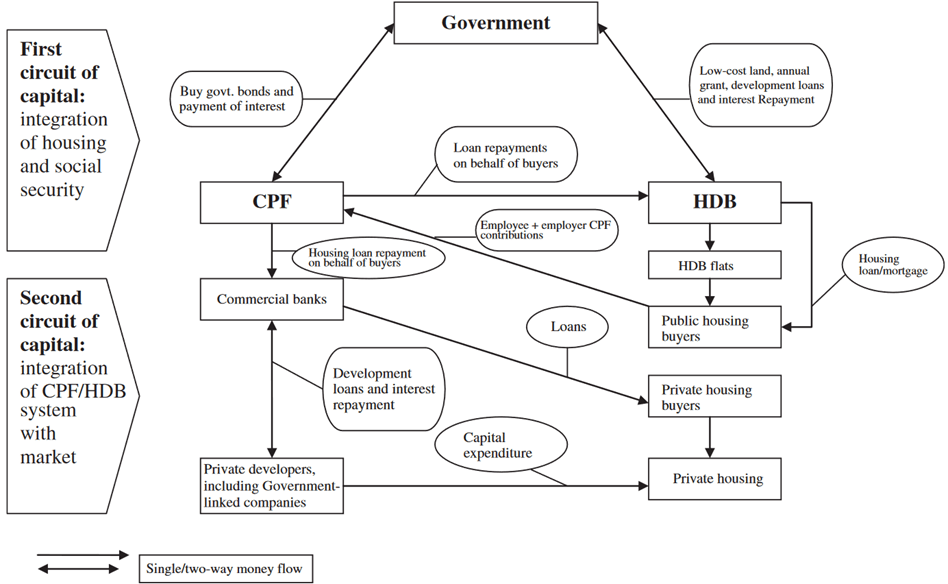
Figure 2: Singapore’s integration of housing and social security systems (Lee, 2009).
Rather than benefiting private landlords, owner-occupiers gain from wealth accumulation as they purchase PPH at subsidised rates which appreciate in value (Haila, 2016, p. 125). However, there are intergenerational equity and long-term sustainability issues regarding the reliance on rising house prices to finance retirement (Phang and Helble, 2016). The government also benefits financially, drawing directly from CPF savings to avoid competing for loans from the broader financial system. The HDB’s capital budget, funded through this mechanism, accounted for one-third of the government’s development estimates in the state budget (Yuen, 2002, p. 44).
The third goal, socioeconomic development has succeeded by using PPH to deliver socially desirable outcomes. PPH were planned as self-sufficient townships with good standards of infrastructure, amenities, services, and shops, at reasonable or no cost to users. PPH estates are effectively 15-minute cities (Moreno et al., 2021), benefitting not just PPH residents but also private housing residents living nearby. Haila (2016, p. 104) noted that this arrangement provides a “fairly high standard of collective consumption goods without undermining capitalism”.
Priced below market rates, PPH also enables socioeconomic development by effectively subsidising labour costs, attracting multinational corporations (MNCs) to Singapore. MNCs can pay relatively lower wages compared to other global cities that experience high housing costs, thus accessing a cheaper workforce (Haila, 2016, p. 88). Additionally, instead of the typical perception of public housing as a burden on public resources, the construction of PPH has stimulated economic growth through a multiplier effect in the building and construction industry (Yuen, 2002, p. 47).
Policymakers aiming to replicate Singapore’s success in PPH need to recognise that achieving similar results cannot be done piecemeal. Countries’ housing regimes are influenced by path dependencies shaped by their respective political, economic, social, and historic contexts (Heo, 2014). Therefore, it is crucial to understand Singapore’s housing policies though its underlying processes and patterns that have emerged under a place-specific political consensus. Four of these are examined: market demand, land policies, power centralisation, and government institutions.
First, there is arguably less pressure on Singapore’s housing markets due to its unique stance on housing rights and migration control. Housing is not a social right. Similarly, public housing is not seen as welfare provision but is defined in terms of property rights where PPH purchases are treated as a business transaction (Haila, 2016, p. 106). Singapore’s welfare regime is oriented towards individual families who resolve their needs through the market instead of providing wide social safety nets (Teo, 2017, p. 383). Semi-skilled transient migrant workers are housed in for-profit worker dormitories regulated under the Foreign Employee Dormitories Act (Ho, 2021), reducing demand for low-priced housing, a challenge for many countries. Additionally, nearly 10% of Singapore’s workforce comprises cross-border daily commuters from Malaysia, further reducing domestic housing demand. Singapore maintains strict border policies and controls and has not ratified the 1951 Refugee Convention, eliminating challenges of housing illegal migrants, asylum seekers, and refugees. This contrasts with some European countries which mandate housing for all and are obligated to provide housing for these groups.
Second, the state is dominant, owning 90% of Singapore’s land, largely through the Land Acquisition Act 1966, allowing it to acquire land for a wide range of purposes including residential, commercial, or industrial (Haila, 2016, p. 93). Historically, land was acquired below market value (with capped compensation values, pre-2007) with the state taking a “strong moral high ground on acquisition … for public housing”, allocating half of acquired land for this purpose (Phang and Helble, 2016). The state uses the rationale of scarce land and high population density to justify its dominance in land ownership and housing provision (Phang and Helble, 2016). Singapore is described as a “property state” as land rent is an important government revenue source, while the property sector is an important contributor to economic growth (Ho, 2021). Unlike some markets, the filtering process does not operate in Singapore as private housing does not filter to the middle-income segment which is reliably served by PPH (Phang and Helble, 2016). Tight land regulation leaves no room for “speculation, deterioration, and urban decay” (Ho, 2021). However, the 99-year fixed-term leases of PPH also mean that values would gradually fall to zero which could undermine political stability unless adjustments are made (Purves, 2024).
Third, as a city-state, Singapore has a highly centralised government where every aspect is determined by government planning and deliberate intervention (Yuen, 2002, p. 39). Government is highly interventionist. For instance, the Social Integration Policy has been described by a Deputy Prime Minister as “the most intrusive policy” which “has turned out to be the most important” (Phang and Helble, 2016). However, the state is evidently not infallible. For example, inaccurate PPH demand forecasts have led to severe supply-demand mismatches (Wetzstein, 2019). Lee Kuan Yew candidly described this top-down government approach in the same 2000 lecture (Ministry of Information and The Arts, 2000):
To build a more stable Singapore, I did not discuss nor ask our different races whether they liked to live integrated together in the new high-rises … The British had allowed them to be segregated … because it was easier to rule such groups of peoples. We had to form a nation. My colleagues and I decided that people would ballot for their resettlement apartments. Their neighbours would be Chinese, Malays, Indians, Eurasians or everybody else. I did not seek their consent. For the first few years they were not comfortable. After 10 years, it became the way of life in Singapore.
Fourth, PPH’s success has been driven by two strongly interlinked government institutions – the HDB and CPF. The HDB wields “extensive powers” (Yuen, 2002, p. 40), in contrast, most municipal housing offices elsewhere fail because they have too little power (Haila, 2016, p. 115). To maintain PPH affordability, the government subsidises the HDB. While the HDB was institutionalised to manage and recapture costs (Ho, 2021), it has relied on government grants to remain solvent (Yuen, 2002, p. 43). A senior government official described the situation as a big cross-subsidisation scheme where the HDB is “the biggest loss-maker in the world” (Wetzstein, 2019). Regarding the CPF, while savings belong to individuals, there are strict rules on how these funds can be used, primarily for retirement, public housing, and healthcare, with very limited flexibility for withdrawal. The HDB and CPF are part of a well-coordinated network of interlinked government institutions. These institutions are dynamic, capable of adapting to changing social and economic conditions to ensure the continued relevance of their policies and programmes (Yuen, 2002, p. 55). While a housing provident fund like the CPF would be relatively straightforward to implement, the complexity of the HDB would be difficult to replicate, and Singapore’s interventionist approach might “easily spawn widespread inefficiency and corruption in other sociopolitical contexts” (Phang and Helble, 2016).
In conclusion, Singapore’s PPH has succeeded because of its interlinked, mutually reinforcing policies and mechanisms that have evolved synergistically over time, leading to compounding positive outcomes. In 2018, the incoming Prime Minister Lawrence Wong stated that “HDB living is very much an integral part of our national identity and our way of life” (Ministry of National Development, 2018), highlighting how Singapore’s housing policies are intricately linked with land, economic, and social policies (Haila, 2016, p. 86). These interrelated policies have been crucial to Singapore’s prosperity with a political system operating as a de facto one-party state. Given this context, the wholesale application of Singapore’s PPH experience is doomed to fail. However, an in-depth systemic analysis of Singapore’s approach would provide enlightening insights for policymakers.
References
Chua, B.H. (2014) ‘Navigating Between Limits: The Future of Public Housing in Singapore’, Housing Studies, 29(4), pp. 520–533. Available at: https://doi.org/10.1080/02673037.2013.874548.
Goh, D.P.S. (2019) ‘Super-diversity and the bio-politics of migrant worker exclusion in Singapore’, Identities, 26(3), pp. 356–373. Available at: https://doi.org/10.1080/1070289X.2018.1530899.
Haila, A. (2016) Urban land rent: Singapore as a property state. Chichester, West Sussex, UK: John Wiley & Sons Inc.
Ho, K.C. (2021) ‘Land and Housing in Singapore: Three Conversations with Anne Haila’, The American Journal of Economics and Sociology, 80(2), pp. 325–351. Available at: https://doi.org/10.1111/ajes.12394.
Lee, J. (2009) ‘Developmentalism, social welfare and state capacity in East Asia: integrating housing and social security in Singapore’, Journal of Asian Public Policy, 2(2), pp. 157–170. Available at: https://doi.org/10.1080/17516230903027880.
Ministry of Information and The Arts (2000) Collins Family International Fellowship Lecture by Senior Minister Lee Kuan Yew at the Forum, John F Kennedy School of Government, Harvard University. Available at: https://www.nas.gov.sg/archivesonline/data/pdfdoc/2000101706.htm (Accessed: 2 April 2024).
Ministry of National Development (2018) Speech by Minister Lawrence Wong at the HDB PEAK Forum. Available at: https://www.mnd.gov.sg/newsroom/speeches/view/speech-by-minister-lawrence-wong-at-the-hdb-peak-forum (Accessed: 20 April 2024).
Moreno, C., Allam, Z., Chabaud, D., Gall, C. and Pratlong, F. (2021) ‘Introducing the “15-Minute City”: Sustainability, Resilience and Place Identity in Future Post-Pandemic Cities’, Smart Cities, 4(1), pp. 93–111. Available at: https://doi.org/10.3390/smartcities4010006.
Nasir, K.M. and Turner, B.S. (2014) ‘Singaporean demography from past to present: Fertility and migration trends’, in The Future of Singapore: Population, Society and the Nature of the State. London: Routledge, pp. 16–31.
Paccoud, A. (2017) ‘Buy-to-let gentrification: Extending social change through tenure shifts’, Environment and Planning A: Economy and Space, 49(4), pp. 839–856. Available at: https://doi.org/10.1177/0308518X16679406.
Phang, S.Y. and Helble, M.C. (2016) Housing Policies in Singapore. 449. Tokyo: Asian Development Bank Institute. Available at: http://www.ssrn.com/abstract=2753487 (Accessed: 26 March 2024).
Purves, A. (2024) ‘Singapore’s Imminent Expiration of Land Leases: From Growth and Equality to Discontent and Inequality?’, Tijdschrift voor Economische en Sociale Geografie, 115(1), pp. 155–169. Available at: https://doi.org/10.1111/tesg.12547.
Schwartz, H. and Seabrooke, L. (2008) ‘Varieties of Residential Capitalism in the International Political Economy: Old Welfare States and the New Politics of Housing’, Comparative European Politics, 6(3), pp. 237–261. Available at: https://doi.org/10.1057/cep.2008.10.
Teo, Y. (2017) ‘The Singaporean welfare state system: with special reference to public housing and the Central Provident Fund’, in C. Aspalter (ed.) The Routledge International Handbook to Welfare State Systems. Abingdon, Oxon ; New York, NY : Routledge, 2017.: Routledge, pp. 415–429. Available at: https://doi.org/10.4324/9781315613758-31.
Wetzstein, S. (2019) ‘Comparative housing, urban crisis and political economy: an ethnographically based “long view” from Auckland, Singapore and Berlin’, Housing Studies, 34(2), pp. 272–297. Available at: https://doi.org/10.1080/02673037.2018.1487038.
Wong, T.-C. and Yap, A. (2003) ‘From universal public housing to meeting the increasing aspiration for private housing in Singapore’, Habitat International, 27(3), pp. 361–380. Available at: https://doi.org/10.1016/S0197-3975(02)00062-0.
Yuen, B. (2002) ‘Singapore’, in Mohd. Razali Agus, J.F. Doling, and D.-S. Lee (eds) Housing policy systems in South and East Asia. Houndmills, Basingstoke, Hampshire ; New York: Palgrave Macmillan, pp. 38–59.
Yuen, B., Kwee, L.K. and Tu, Y. (2006) ‘Housing Affordability in Singapore: Can We Move from Public to Private Housing?’, Urban Policy and Research, 24(2), pp. 253–270. Available at: https://doi.org/10.1080/08111140600703857.


